
If you’re aiming to build or upgrade a gaming PC this year, finding the right GPU for smooth 1080p gameplay can be tricky, especially with rising prices, endless options and if it can run next-gen games. That’s where the Radeon™ RX 9060 XT, paired with the ASUS Prime OC variant, stands out. Powered by AMD’s latest RDNA 4 architecture and the efficient Navi 44 GPU, it delivers excellent frame rates, upgraded ray tracing, and smart AI enhancements tailored for Full HD performance.

With a clean triple-fan design, quiet thermals, and 16 GB of VRAM for future-proofing, the ASUS Prime RX 9060 XT offers exceptional value. Priced around PHP 26,000 in the Philippine market, it’s an easy recommendation for budget-conscious gamers looking to hit that 1080p sweet spot without compromise.
The RDNA 4 Architecture: Efficient Power for the Masses
AMD’s RDNA 4 graphics architecture brings a massive uplift in efficiency and AI-accelerated features. The Navi 44 GPU, built on TSMC’s 4nm N4P process, introduces 2,048 stream processors, 64 AI accelerators, and 32 RT accelerators in a chip optimized for high performance-per-mm².

The RDNA 4 architecture brings a host of next-gen features designed to elevate gaming performance and visual fidelity. One of the most significant upgrades is FSR 4 (FidelityFX Super Resolution), which is now powered by machine learning and exclusive to the RX 9000-series. It delivers a noticeable improvement in image quality across all presets. More impressively, it allows games rendered at 1080p to be upscaled to 1440p or even 4K, maintaining sharp visuals without placing additional strain on the GPU, a game-changer for budget-conscious builds. As of now, FSR 4 is supported in over 65 games, including Monster Hunter Wilds, Black Myth Wukong, inZOI, and many more upcoming titles. More of this performance on the gaming benchmark.
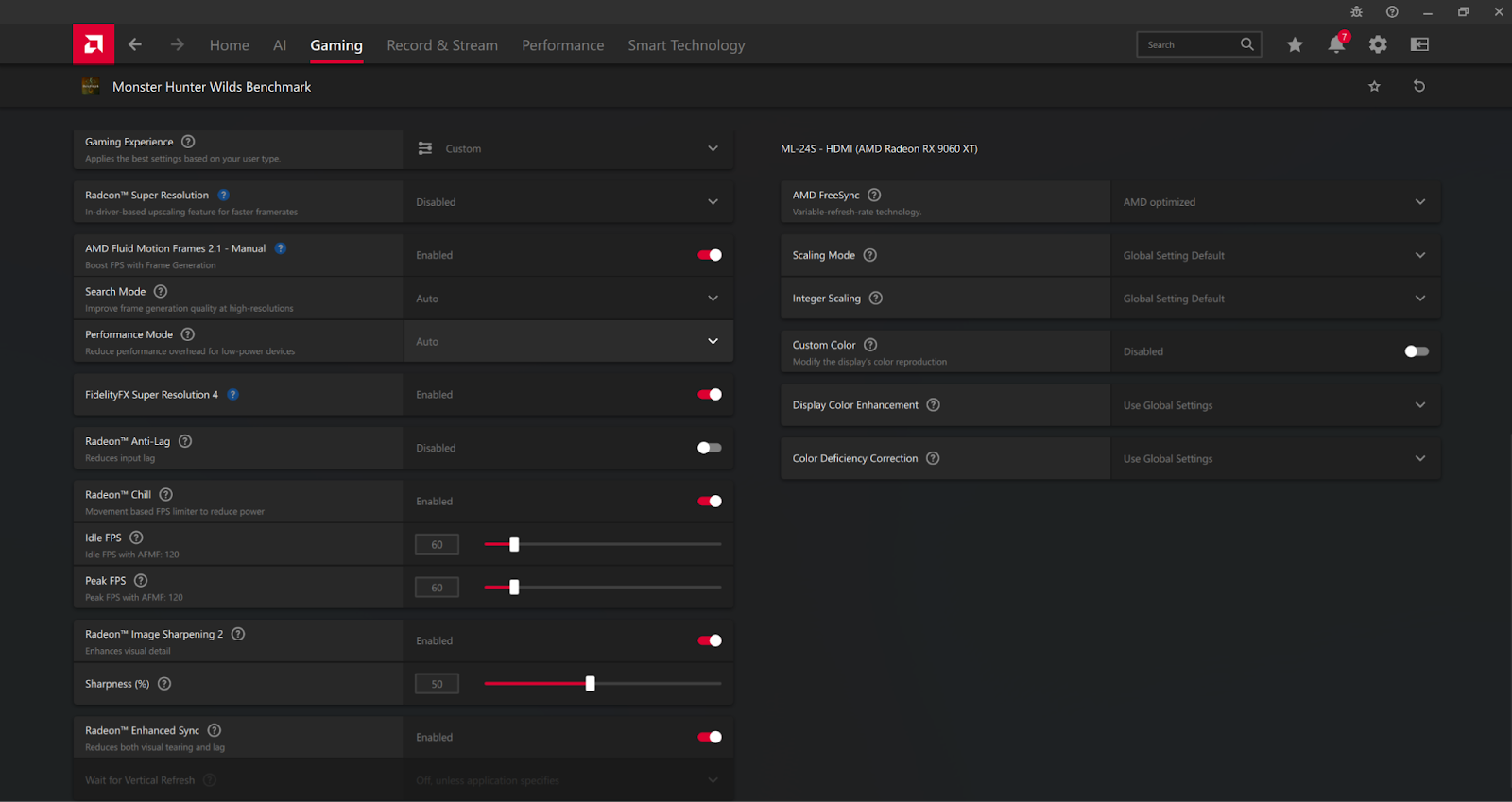
Complementing FSR 4 is Fluid Motion Frames 2.1 (FMF 2.1), AMD’s enhanced AI-powered frame generation technology. It intelligently inserts interpolated frames to reduce ghosting and improve temporal stability, resulting in noticeably smoother motion, whether you’re navigating fast-paced action or cinematic cutscenes. If you’re experiencing stuttering or choppy frame rates in certain games, enabling FMF 2.1 can be a highly effective way to smooth out the experience without a major performance hit.
Lastly, RDNA 4 introduces upgraded AI and Ray Accelerators that double the ray tracing performance over the previous generation. This not only brings AMD closer to NVIDIA’s RT performance but also lays the groundwork for future innovations like neural rendering and advanced denoising. These improvements support AMD’s Project Redstone, a long-term vision for AI-enhanced gaming that pushes the boundaries of real-time graphics and immersive environments.

RDNA 4’s out-of-order memory system improves ray tracing and frame stability. Combined with AMD’s AI-powered software stack, Image Inspector, AMD Chat, and AFMF, this generation is smarter, faster, and more efficient than ever before.
ASUS Prime OC Design: Simple, Cool, and Reliable
The ASUS Prime Radeon™ RX 9060 XT O16G is a straightforward, performance-first graphics card aimed at gamers who value quiet operation, reliable cooling, and long-term durability. It ditches flashy RGB in favor of a clean, minimalist aesthetic that fits seamlessly into most builds. Despite its subtle design, it packs serious engineering under the hood.

At the core of its thermal solution is a 2.5-slot triple-fan setup using ASUS’ Axial-tech fans, known for their high static pressure and efficient cooling performance. These fans work in tandem with two large heatpipes and an extended heatsink, keeping the GPU cool even during demanding sessions. The card also supports 0dB fan technology, ensuring silent operation during light workloads.

ASUS further enhances flexibility with a built-in Dual BIOS switch. Users can toggle between Performance mode, which ramps up the fans for lower temperatures, and Quiet mode, which maintains solid performance while reducing fan speed and noise.

Physically, the card feels robust thanks to GPU Guard, a full-length metal backplate, and thermal pads that help dissipate heat from both memory and VRM components. It also features a PCIe Gen 5 x16 interface, delivering full bandwidth, which could benefit users still running on older PCIe Gen 3 systems.
Gaming Benchmarks: Smooth, Stable 1080p & 1440p
To see how the ASUS Prime Radeon RX 9060 XT performs in real-world scenarios, we tested a few demanding titles using AMD’s latest technologies, FSR 4 and Fluid Motion Frames (FMF) 2.1, to simulate how gamers would realistically play today’s games. While this GPU is best positioned for 1080p gaming, its performance at 1440p with upscaling and frame generation proves that it’s more capable than its midrange label suggests.
Monster Hunter Wilds (Ultra Settings)
We tested Monster Hunter Wilds at both 1080p and 1440p on Ultra settings. With FSR 4 and Frame Generation enabled, performance received a significant uplift, especially at 1440p. In fact, even when paired with a 1080p display, rendering the game at 1440p and upscaling it down results in noticeably sharper visuals compared to native 1080p, highlighting one of the smart use cases of FSR 4.
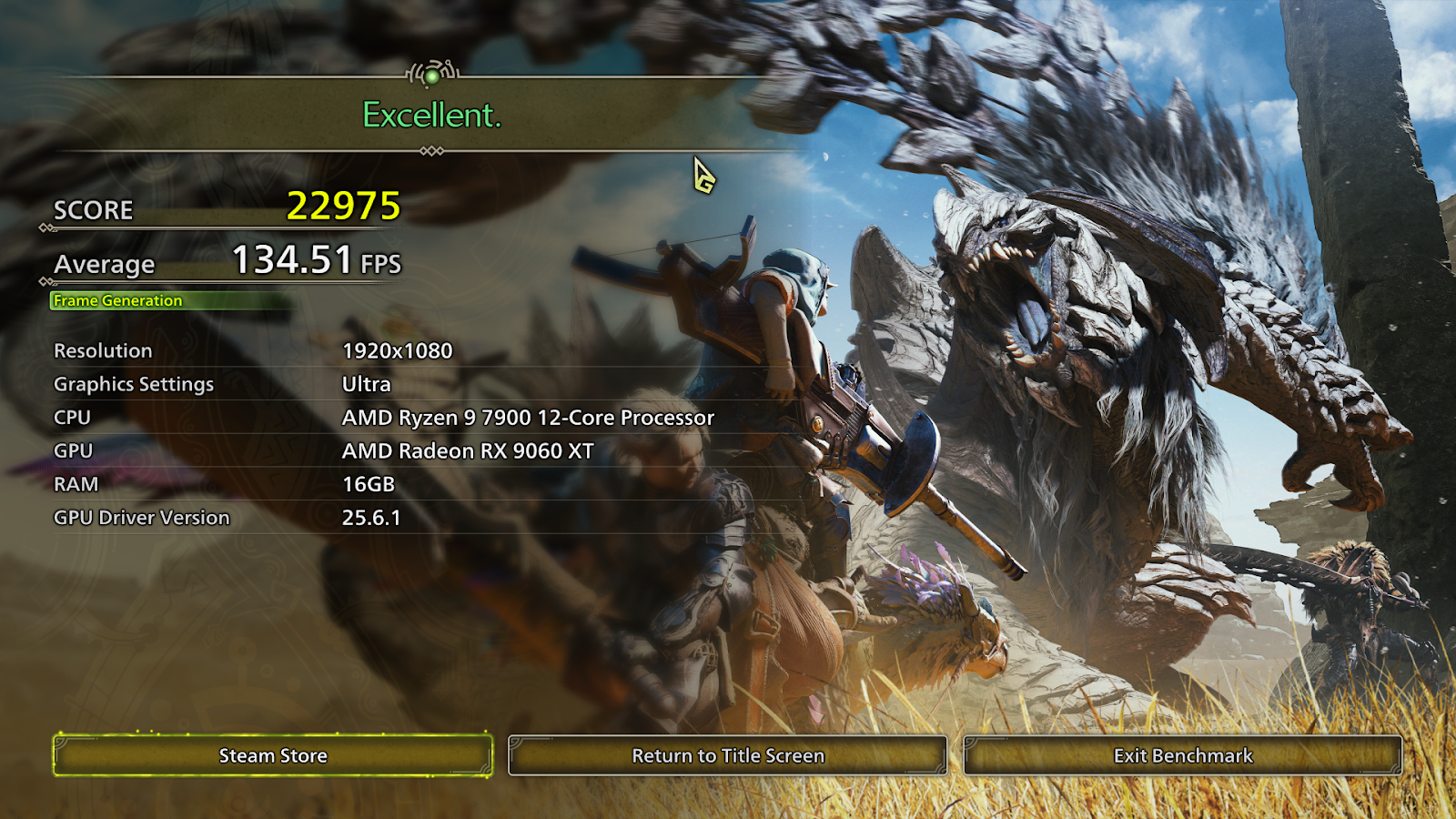
| Resolution | Default | FSR and Frame Generation Enabled |
| 1080p | 74.31 FPS (Score: 25,300) | 134.51 FPS (Score: 22,975) |
| 1440p | 68.56 FPS (Score: 23,402) | 108.89 FPS (Score: 18,570) |
These numbers show that while the GPU excels in 1080p, it also handles 1440p gaming impressively well with the right features turned on.
Black Myth: Wukong (Medium Settings)
We also tested Black Myth: Wukong, a visually intensive game, at both 1080p and 1440p using medium settings. The results demonstrate how frame generation and FSR 4 elevate performance to more than playable levels, even in demanding scenes.
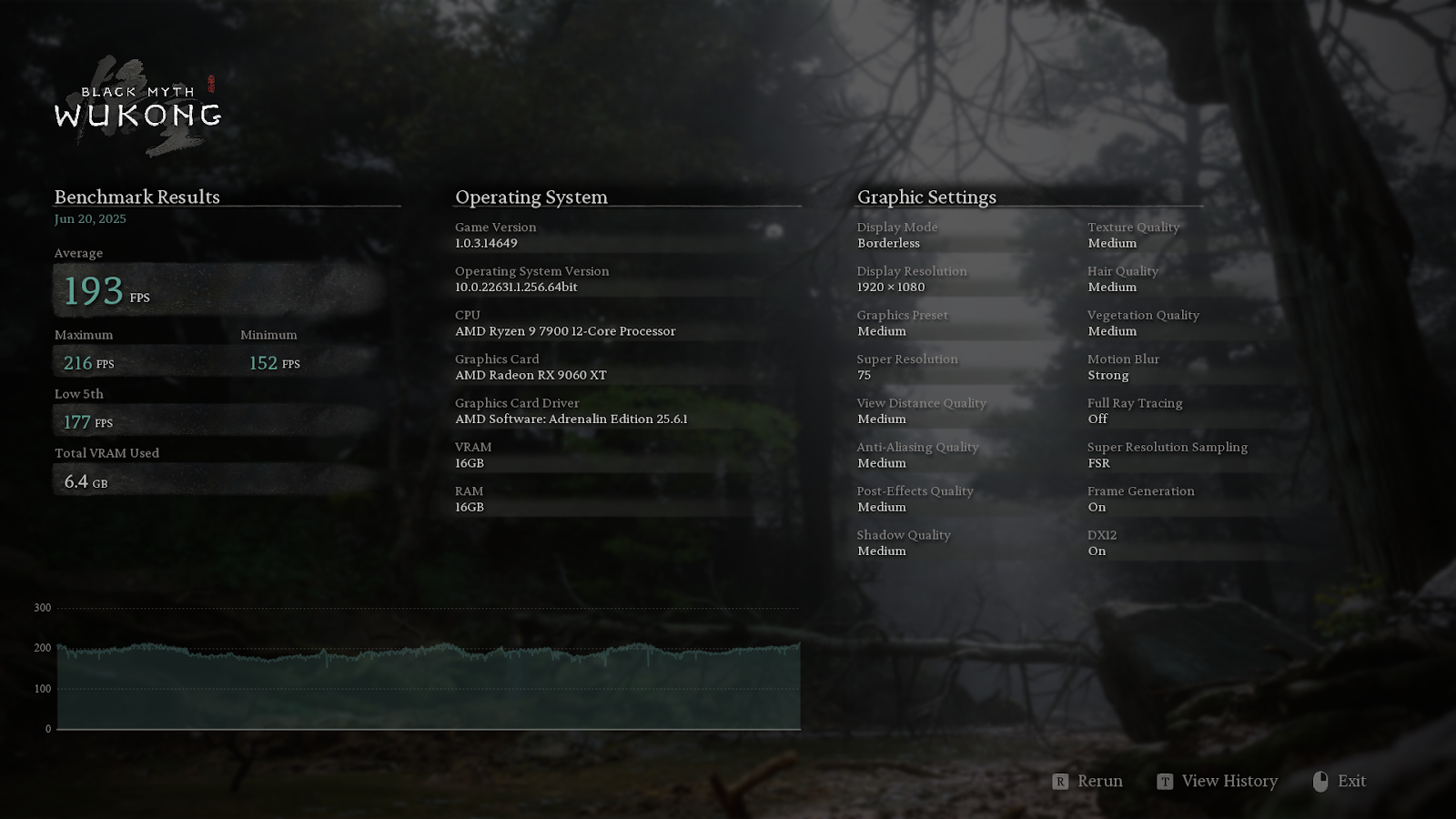
| Resolution | Default | FSR and Frame Generation Enabled |
| 1080p | Avg: 132 FPS / Max: 160 / Min: 85 | Avg: 193 FPS / Max: 216 / Min: 152 |
| 1440p | Avg: 99 FPS / Max: 120 / Min: 75 | Avg: 125 FPS / Max: 141 / Min: 74 |
With Medium Ray Tracing enabled with FSR and Frame Generation, the GPU was able to achieve an average of 90 FPS, with peaks reaching 111 FPS and dips going as low as 73 FPS in 1080p resolution.

Without these enhancements, the game managed a decent score, an average of around 132FPS at 1080p Ultra. With FSR 4 and FMF 2.1 enabled, even 1440p gameplay becomes smooth and responsive, keeping average frame rates above 193 FPS, even in ray-traced environments.
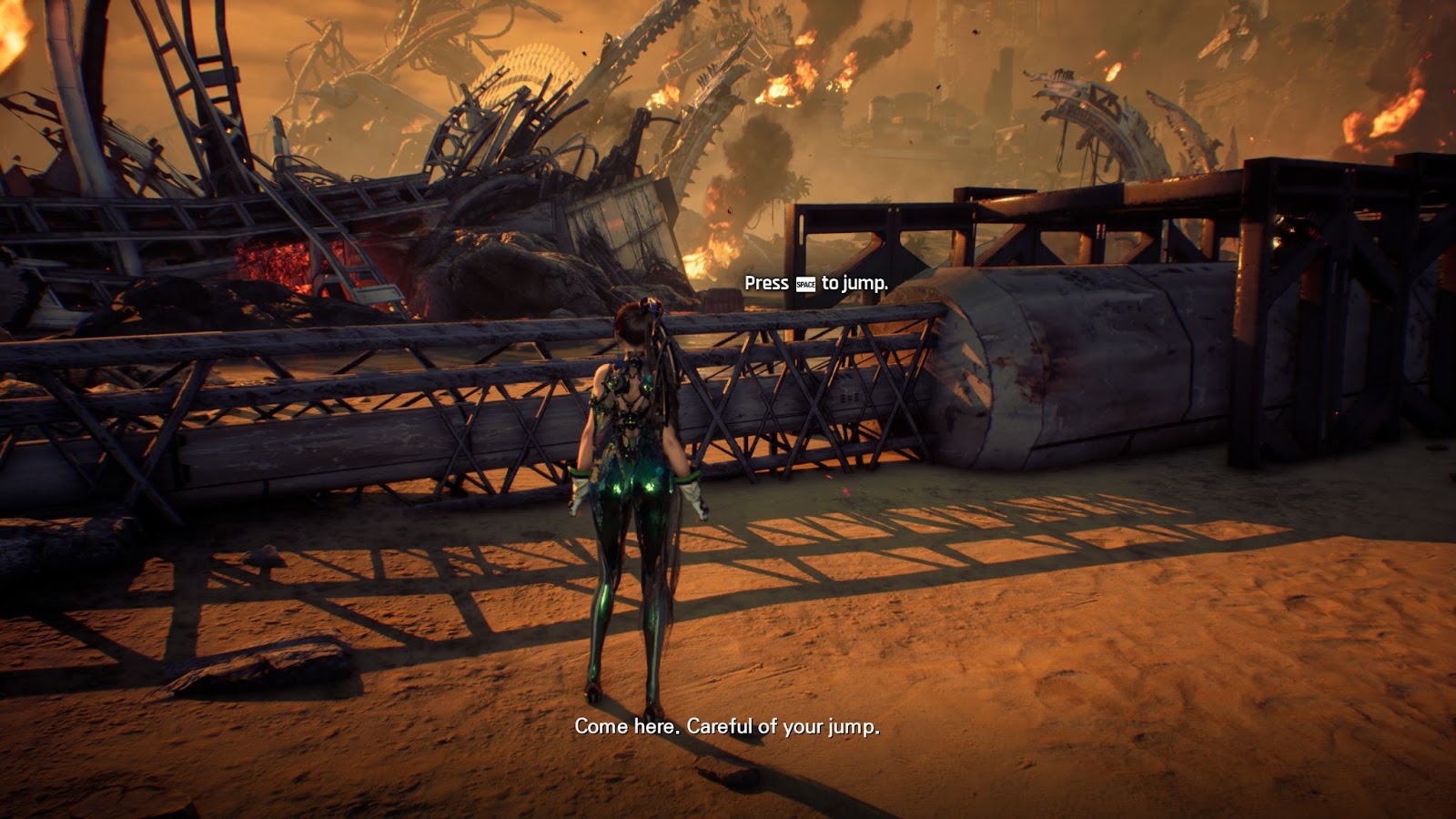
Lastly, we tested Stellar Blade, which lacks a built-in benchmark tool. For this title, we relied on AMD’s performance overlay during live gameplay. The game already runs well by default both at an average of 200FPS, but enabling FSR 4 and Frame Generation noticeably reduced FPS drops during combat-heavy scenes and fast transitions, keeping the experience consistently fluid.
Bonus: ASUS Promo – Rate Your Gear
Buying the ASUS Prime RX 9060 XT? You can get up to P1,000.00 in GCash credits by sharing your experience through ASUS’ “Rate Your Gear” promo.
Join here: https://ph.asus.click/ryg
Conclusion: 1080p Gaming Just Got Smarter
With strong raster and RT performance, energy efficiency, silent cooling, and a fair price, the ASUS Prime Radeon™ RX 9060 XT O16G is our top pick for 1080p gamers in 2025. Add FSR 4, Fluid Motion Frames, and 16 GB VRAM to the mix, and you’re looking at a graphics card that performs well today and stays ready for tomorrow.

Recommended For:
- Budget-conscious gamers
- 1080p & light 1440p gamers
- Ray tracing beginners
Avoid If:
- Plan to play heavily at 4K