
We recently visited Ubisoft Philippines for Ugnayan, an exclusive studio tour that took us behind the scenes of game development. It was a chance to meet the people behind the games, explore their workplace, and see how ideas become experiences enjoyed by players around the world.
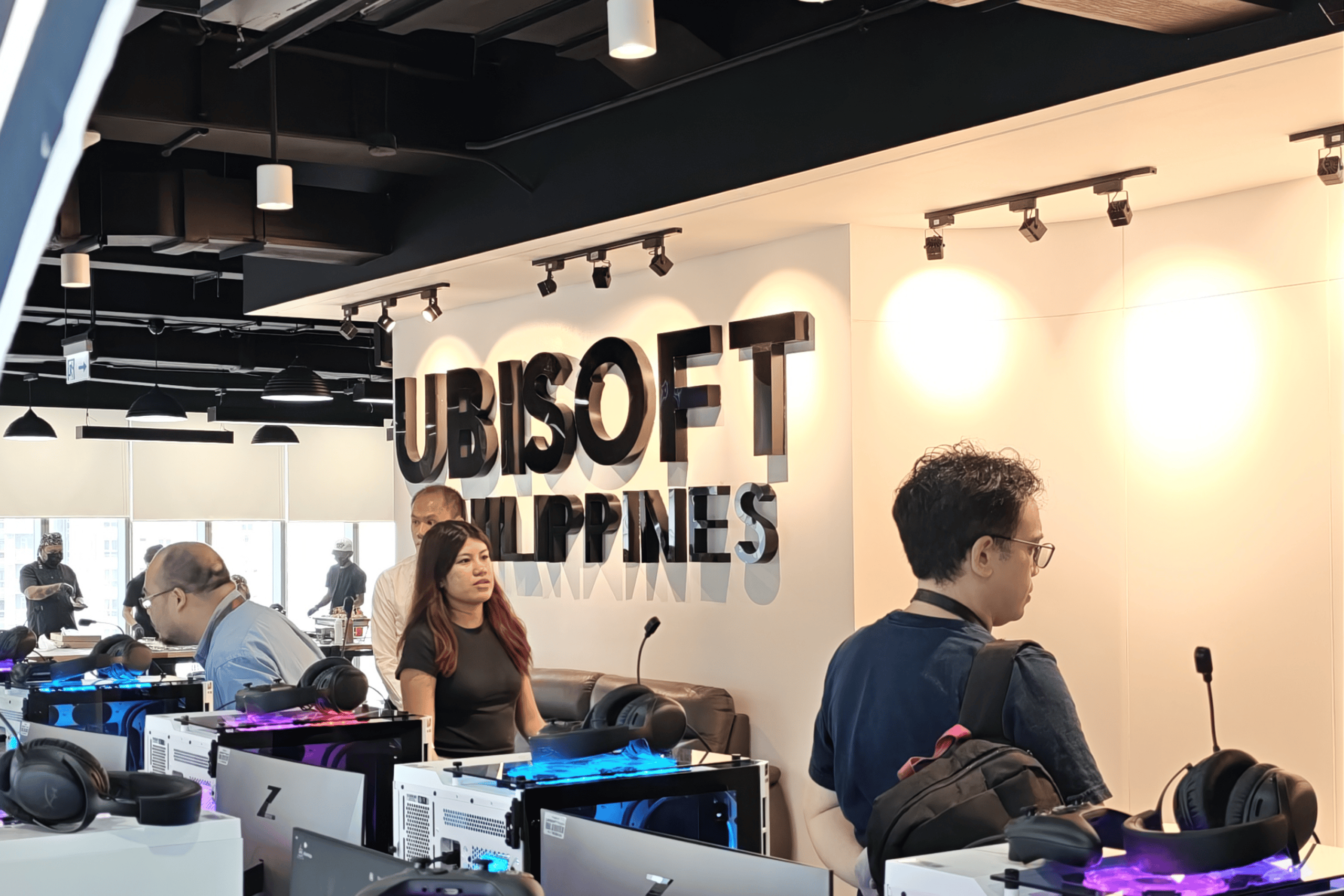
We also played Assassin’s Creed Black Flag Resynced and heard directly from the Filipino developers who helped bring it to life. The visit made one thing clear: Ubisoft Philippines is helping shape complete features, locations, and systems that players will experience in the game.
A Decade of Growth for Ubisoft Philippines
Studio manager Sashi Menon opened the event by looking back at how far Ubisoft Philippines has come. Over the past decade, the studio has developed the skills needed to take on projects that are larger and more complex than ever.

Assassin’s Creed Black Flag Resynced became a major opportunity to put that growth on display. The project brought together the studio’s experience in art, animation, world building, gameplay, technology, audio, and quality assurance.

Menon also stressed that a game of this scale is never made by one person or department. It takes the whole Ubisoft Philippines team, working closely with other Ubisoft studios, to bring everything together.
Entering a Gallery of Ubisoft History
Our tour began at the studio entrance, which felt like a small gallery celebrating Ubisoft’s history. At its center stood an impressive wooden sculpture of Ezio Auditore, handcrafted by a local Filipino artist.
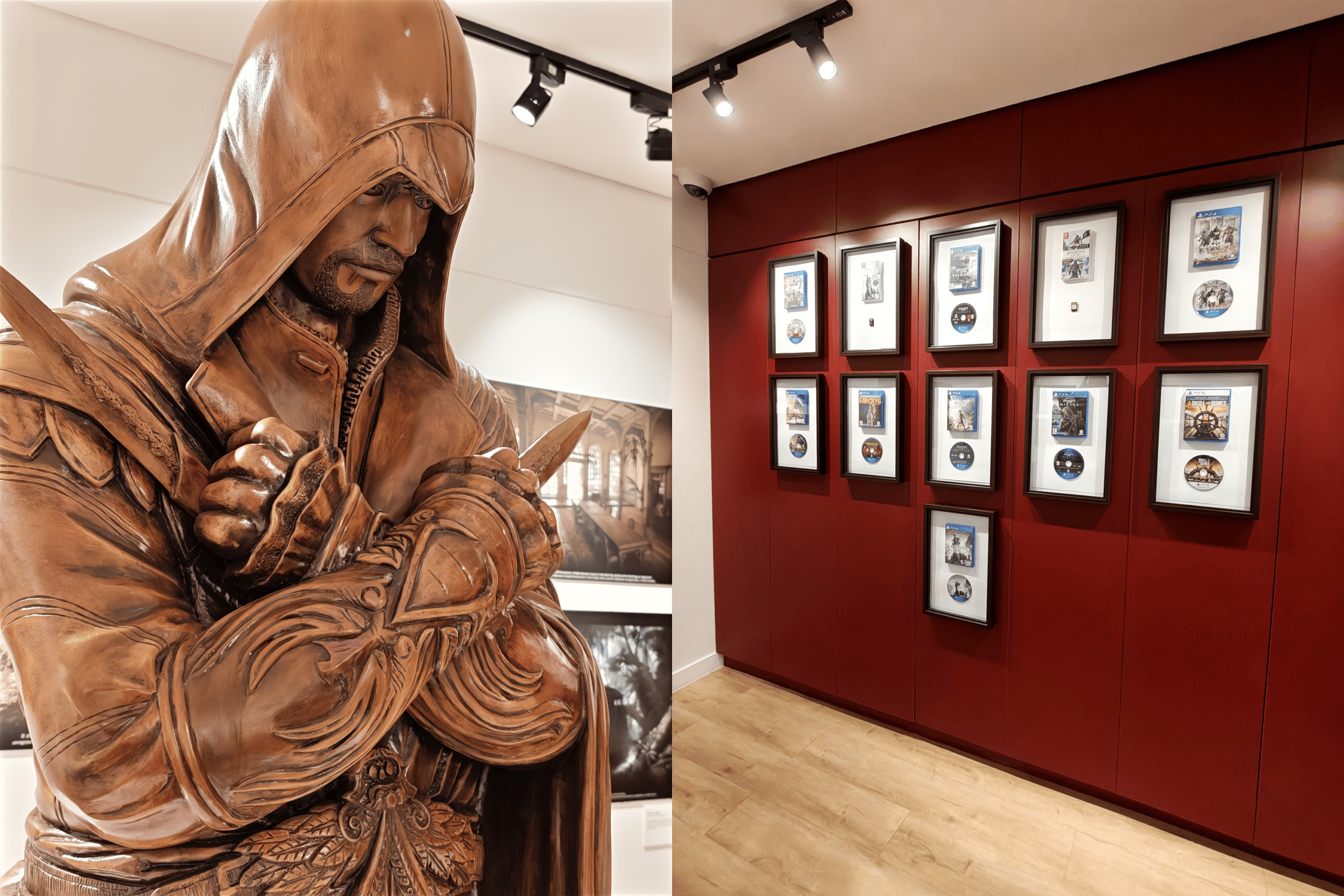
Around the sculpture were framed artworks highlighting projects supported by the Philippine studio. We spotted pieces from Assassin’s Creed Black Flag Resynced, Shadows, Mirage, Valhalla, and several other titles.

It was a fitting introduction. Before the presentations even began, the gallery already showed how many games carry the work of Filipino developers.
Playing Assassin’s Creed Black Flag Resynced
As one of the event’s special side quests, we got hands-on time with Assassin’s Creed Black Flag Resynced.

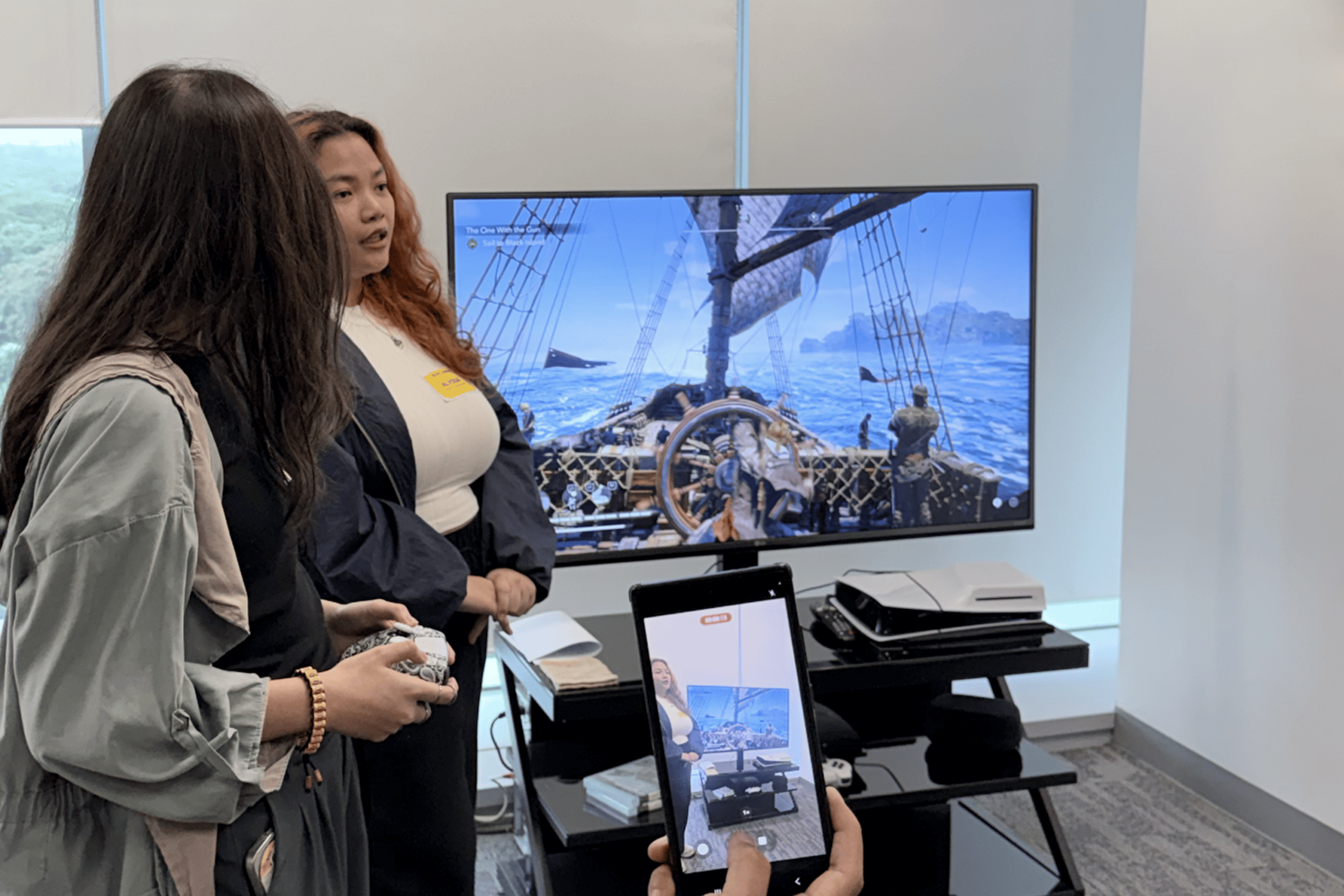
During the session, we took control of the Jackdaw, entered naval combat, attacked a fort, and played an invasion sequence. While these activities were already familiar to players, experiencing them inside Ubisoft Philippines became more meaningful once the developers explained how the local team helped build and improve many of their underlying systems.

Playing inside the studio was already memorable. Later hearing from the developers responsible for many of the features we had just experienced made it even more special.

Making Harpooning More Dynamic
The team gave us a closer look at the harpooning activity it co-developed. Instead of simply copying the original feature, the developers studied reference materials and acted out movements inside the studio to understand how every part should look and feel.
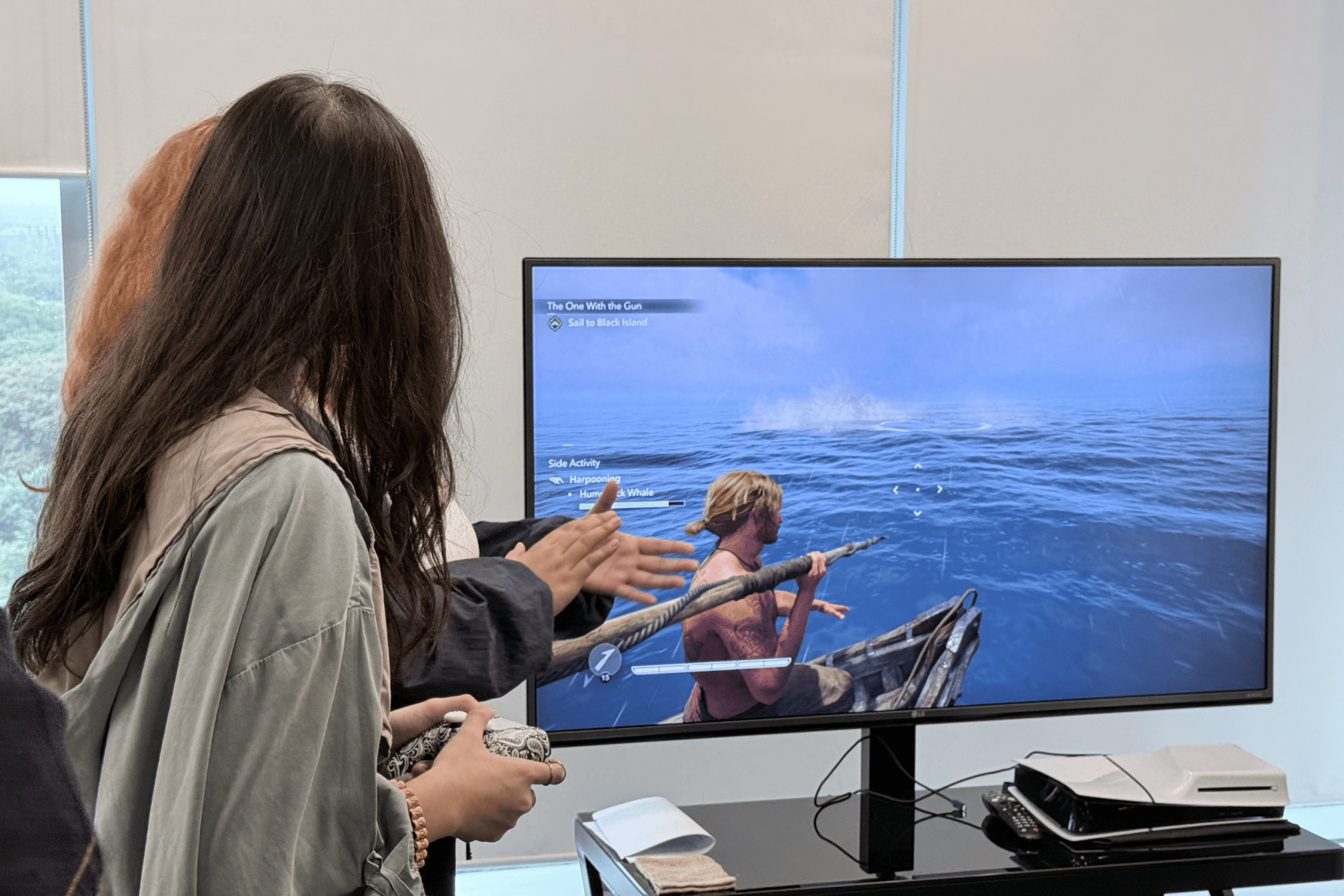
Their goal was to make the hunt feel less fixed and more like a struggle at sea. The harpoon rope now moves using physics, the boat reacts to waves and animal attacks, and Edward shifts his body with the vessel.

Animals also had to be believable without becoming unfair. Different animation phases, random lunges, attack-interrupt windows, and a perfect-shot system keep hunts readable but unpredictable. Getting everything right required animation, design, programming, and QA to test and adjust the feature repeatedly.
Building 11 Distinct Forts
Ubisoft Philippines took full development ownership of the forts in Black Flag Resynced. The local team handled everything from environmental props to the overall design and gameplay of each location.
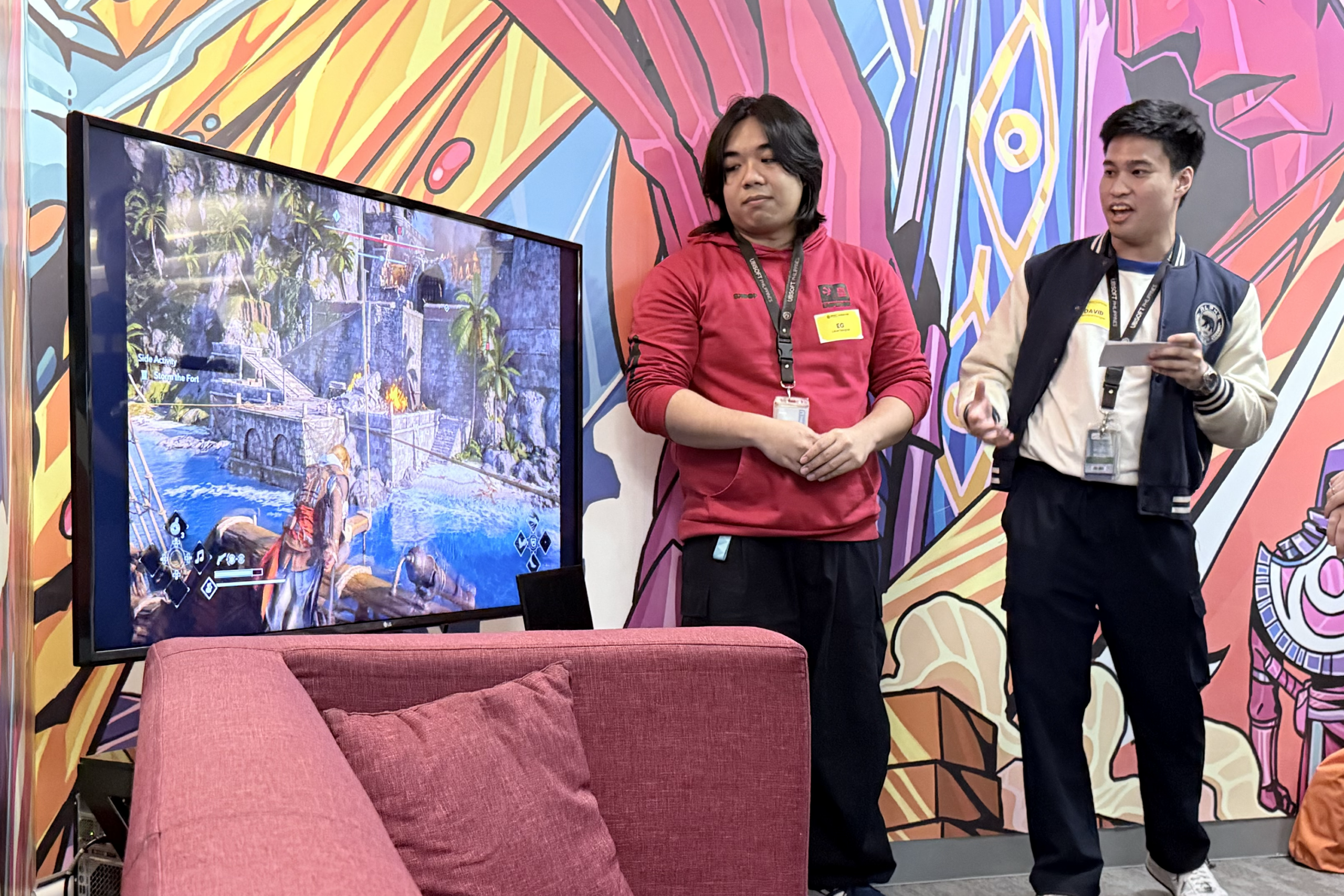
There are 11 forts, and the developers did not want them to feel like copies of one another. Each has its own theme, supported by its layout, dialogue, and set pieces. One fort serves as an ammunition-storage facility filled with explosives players can use during an attack.
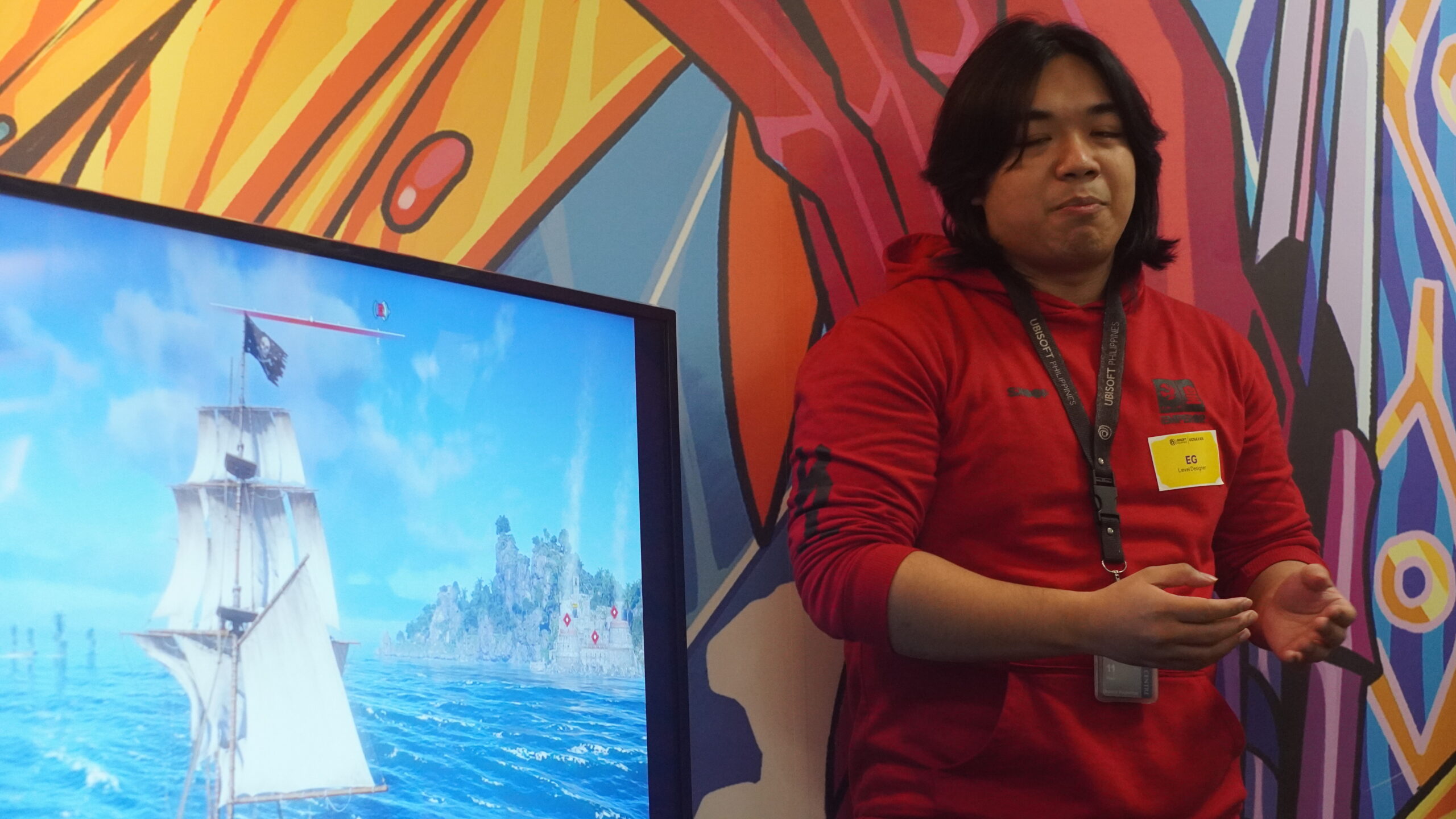
Battles were also built to feel less predictable. Crew members and other NPCs can join the fight and sometimes help finish an assault before the player even leaves the Jackdaw. That freedom created unexpected situations, and plenty of bugs for the team to solve.

The result is an assault that reacts to the player instead of forcing everyone down one path. After victory, pirates occupy the captured fort to show that control has changed hands, while a tougher showdown against the captain and guards gives each takeover a proper finish.
From Real-World Reference to In-Game Animation
Another presentation showed how a believable animation often begins with a real person performing the movement.
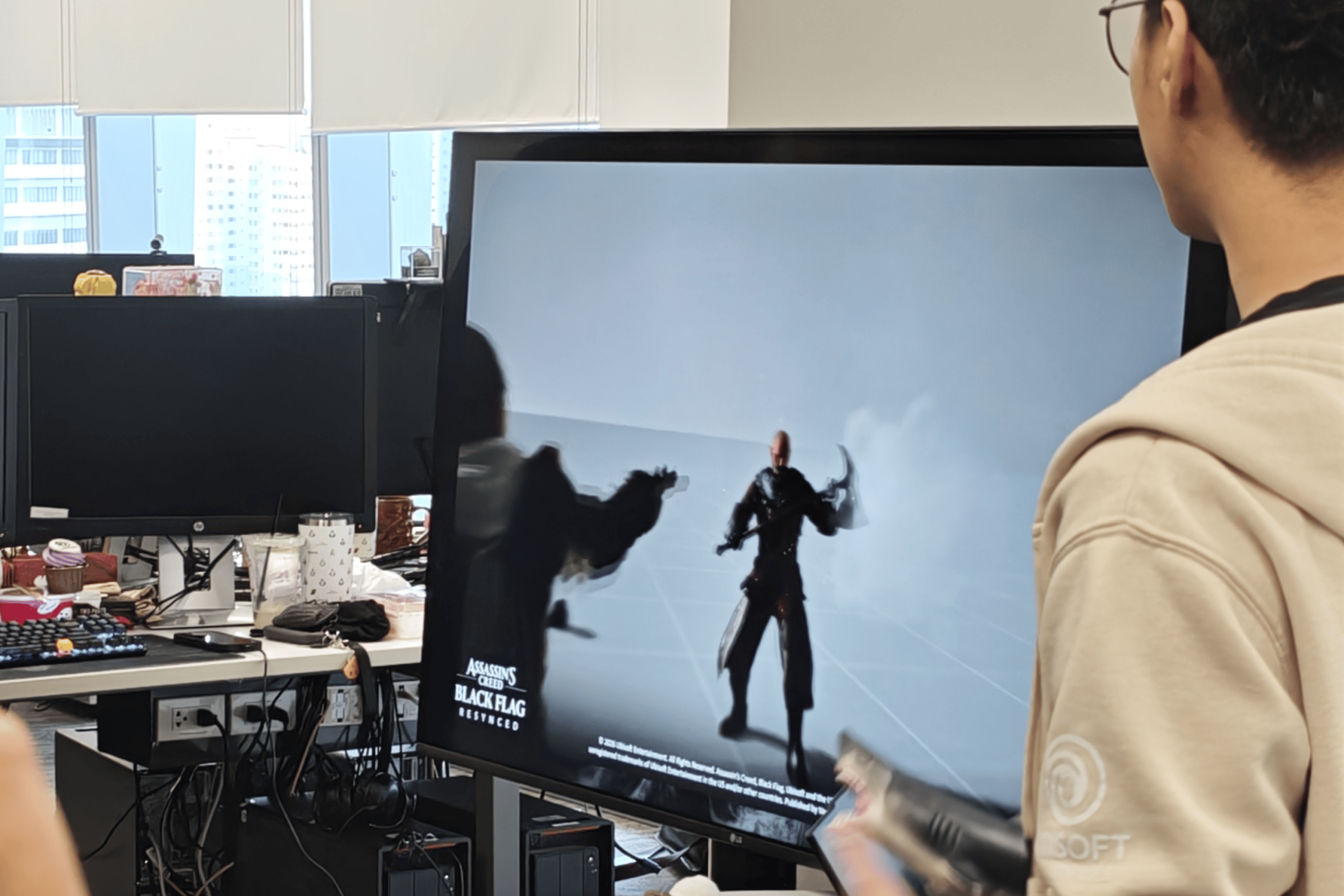
The team films reference footage so animators have a real-world foundation. In one demonstration, we saw a movement performed in the studio beside the finished player takedown it inspired.

The animation is not copied exactly. Artists adjust the poses, timing, and flow so the action works during gameplay and remains easy to follow. In the takedown shown to us, the movement after the struggle was made more fluid and expressive.

Technical animators then ensure those movements work properly in the game. The action must look natural, but it must also respond instantly when the player presses a button.
Weapons, Crowd Clothing, and Trinkets
The Philippine team also walked us through its work on weapons, crowd outfits, and trinkets, details players will see constantly while exploring the game.

For weapons, artists kept the recognizable original designs but rebuilt them with greater detail. Historical research, sharper models, and realistic wear made each one feel suited to its period.

Crowd clothing presented a different challenge: filling cities without making everyone look the same. A small team turned more than 70 base outfits into hundreds of combinations by mixing garment pieces and colors.

The artists also researched period clothing and studied how fabrics fold and move, helping the updated outfits remain believable within the historical setting.

Trinkets are no longer just collectibles. Players can equip two at a time, with each offering a perk that supports a different play style.

Even these tiny items required careful work. Since every trinket has a different shape and size, technical artists created custom rules to keep them positioned correctly on Edward’s belt instead of clipping through his clothes.

These details show how much responsibility the local studio carries. Its developers are not merely producing isolated assets; they are helping build complete systems that affect how the game looks and plays.
Rebuilding the Caribbean World
The world-building presentation explained how many teams must come together before a location feels real. Concept artists study the Caribbean’s coastlines, vegetation, architecture, culture, and history, then turn that research into places that feel authentic and familiar.

Asset artists build the structures, objects, textures, and materials that fill those places. They preserve memorable shapes and colors, then add the detail expected from a modern game. Reusable building pieces also help the team work efficiently without making every area look identical.

A place can tell a story before anyone speaks. A wealthy home may be polished and well maintained, while a busy tavern carries marks left by years of use. These clues reveal something about the people who live there without requiring a cutscene.

Level artists arrange everything into spaces that feel lived in. Sugar shipments, soup kitchens, crowded streets, and NPC routines show how people work and survive across the Caribbean. The team also helped create new content, including a hidden church and Fort Charles.

Technical artists build tools that add detail without overloading the game. Some automatically place foliage and props; others enrich surfaces or use camera tricks to make buildings appear to have interiors without fully constructing every room.

Every change still has to work with parkour, stealth, combat, cameras, and enemy. Level and quest designers turn those pieces into something players can explore. By keeping what worked and adding livelier companions, new collectibles, and small story moments, the team made the Caribbean richer without losing its identity.
Giving Every Location Its Own Sound
The final presentation reminded us that a place does not feel alive through visuals alone. Sound gives every fort, street, and market its own personality.

Fort battles now sound heavier and more chaotic. When a tower falls, destruction continues through blasts and chain reactions, while nearby shouts and clashing weapons make ground battles feel larger. The team also added period-inspired details, including a boatswain’s whistle when docking or boarding and new crew battle cries during attacks. The Observatory received effects for its moving mechanisms and energy beams, giving those moments more weight.

Some sounds began with real gunfire. Members of the Philippine and Singapore teams traveled to Cebu to record gunshots that helped shape the cannons and firearms heard in the game.

We were also introduced to “walla,” the background murmur made by a crowd. Removing it from a busy Havana market made the area suddenly feel empty.

Turn it back on, and the city immediately feels busy again, even when every person cannot be seen. The system changes with the location, language, and number of nearby NPCs, then fades naturally as Edward moves away.

Together, these sounds do more than create atmosphere. They tell players what is happening nearby and make the world feel active beyond the edge of the screen.
Creativity Around the Studio
The tour was not all technical presentations. We also saw the personality and creativity of the people working at Ubisoft Philippines.

One wall displayed artwork made by studio members. Seeing their personal creations proudly presented in the workplace gave the space a more human character.
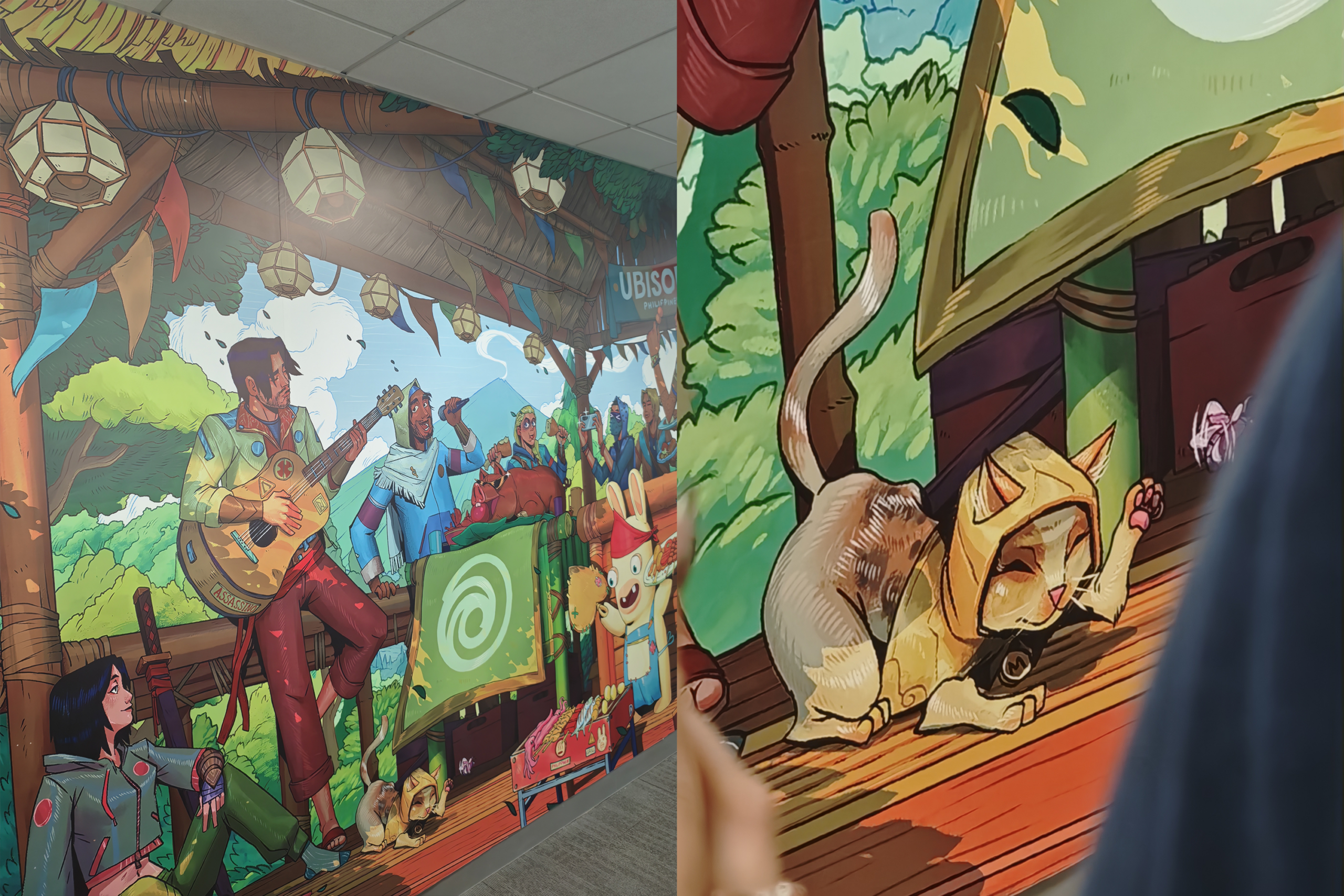
The same artwork appeared on a desk mat included in the raffle, and we were lucky enough to win it. It became more than ordinary event merchandise; it was a souvenir carrying the work of an artist from the Philippine team.
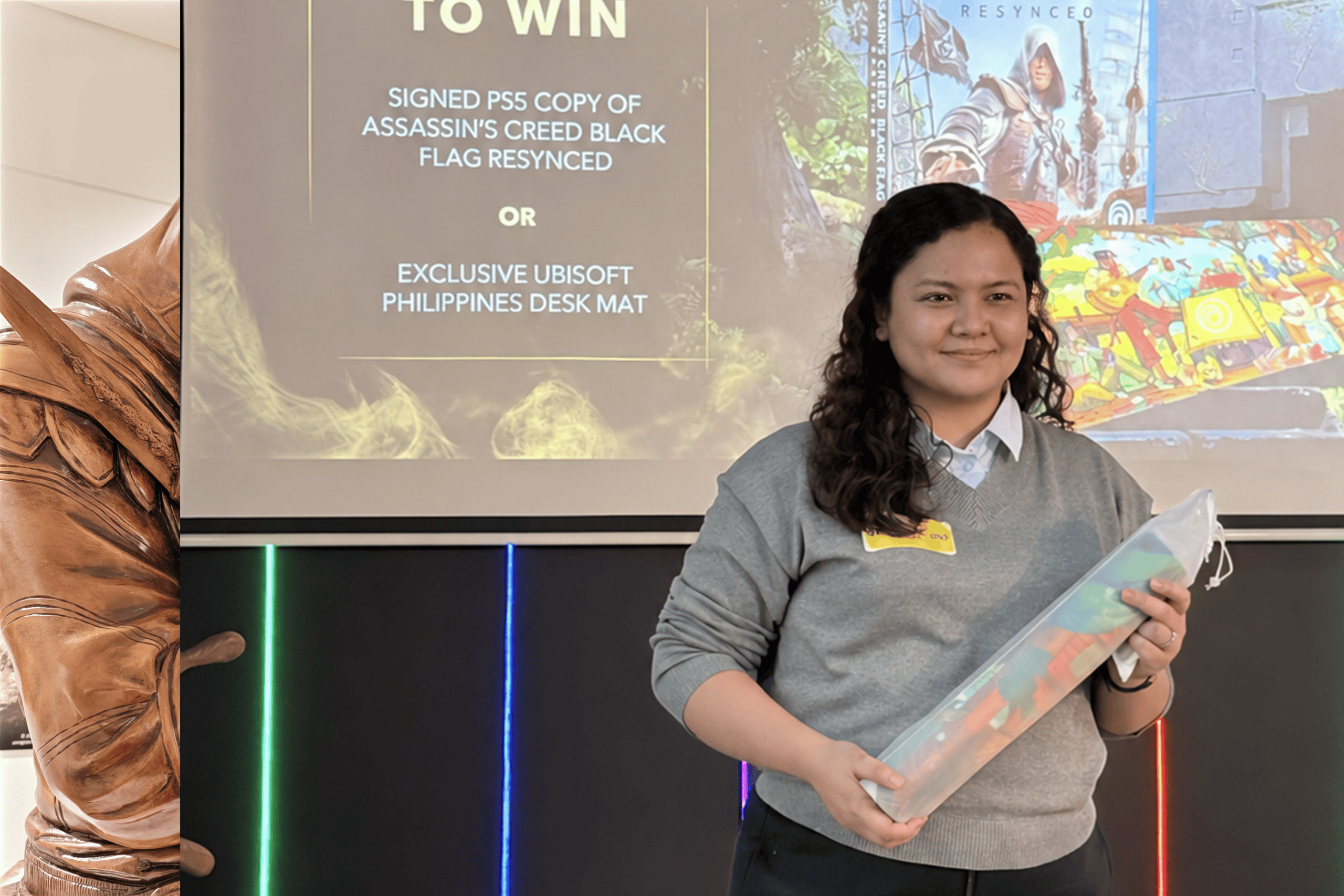
Games and other activities between presentations also gave guests time to relax, meet the developers, and speak with fellow participants.

Developing Future Filipino Game Creators
Ubisoft Philippines is helping develop the next generation of local talent not only by making games, but also by bringing the industry closer to students.

Its initiatives include college internships, job fairs, university talks and workshops, and co-developed game development programs. These efforts help students discover how the industry works and where their own skills might fit.

The tour made it clear that creating a game involves far more than programming and drawing. A project can bring together concept artists, animators, level and quest designers, technical artists, audio specialists, programmers, QA testers, and many other roles.

By introducing students to those possibilities, Ubisoft Philippines is showing young Filipinos that a path into the global games industry can begin here at home.
A Proud Look at Filipino Talent in AAA Development
After seeing the work up close, we came away with a deeper appreciation for the details hidden behind every game.

A rope pulling against a harpoon, voices filling a market, a trinket moving on Edward’s belt, or allies joining a fort battle may last only seconds on screen. Behind each one can be months of research, experimentation, teamwork, and testing.

More importantly, we saw Filipino developers doing far more than supporting production from the sidelines. They are taking ownership of full features and pipelines from the first idea to the experience that reaches players around the world.

Weapon artist Jema Manallo captured that pride while discussing the team’s contributions:

“Honestly, that’s what we’re very proud of because, as an artist working on a game, I used to look at these games and think, ‘I want to work on something like that someday.’ What we hope for Filipino gamers and aspiring developers is that, when they look at these weapons, they’ll realize that the ‘someday’ I once dreamed about can also happen here in the Philippines. They can look at them and say, ‘Uy, Pinoy gumawa nito.’”
— Jema Manallo, Weapon Artist at Ubisoft Philippines
Her words captured what made Ugnayan especially meaningful. Young Filipino artists and developers can see this work, say “A Filipino made this,” and realize that contributing to a major AAA game is not merely a distant dream.

Ubisoft Philippines is not simply helping create games from the country. It is proving that Filipino talent already has a meaningful place in and can help shape the future of game development worldwide.